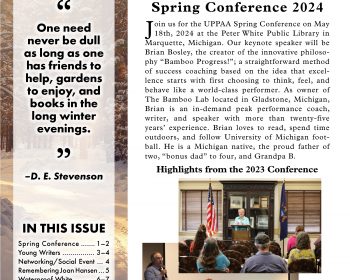
UPPAA Annual Conference, Peter White Public Library, 117 N. Front Street, Marquette, MI
Always FREE for members, ($60 for general public)
please click here to register now!
Hurry, registration ends May 10th, 2024
Young Writers: please register for the Young Writers Storytelling Workshop.
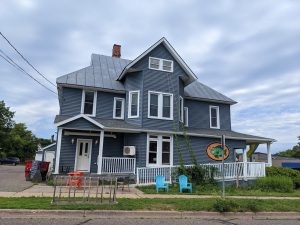 Friday, May 17th 2024 – Pre-Conference Networking & Social Mixer 🆕
Join us from 6:00 pm to 9:00 pm at The Crib, a cozy and comfortable coffeehouse with lots of seating located at 401 N. 3rd St. just steps from the Peter White Library. Light appetizers will be served, and a cash bar will be available. There will be a $10 cover charge. Members are requested to pre-register for this event although you can also pay at the door.
A wide variety of coffee, tea, and other non-alcoholic drinks are available as well as a wide variety of local and imported beers and ciders. White wines are also available.
 An Open Mic night will be running upstairs on the 2nd floor. You can signup in advance to speak or you can tell us at the door too! Open mics allow poets and storytellers — both seasoned and emerging — to share their work in a safe and welcoming space. Bring something you’ve already published or something you’re still working on. We’ll provide a podium, lapel mic and a friendly audience. You’ll provide your best Yooper creativity.
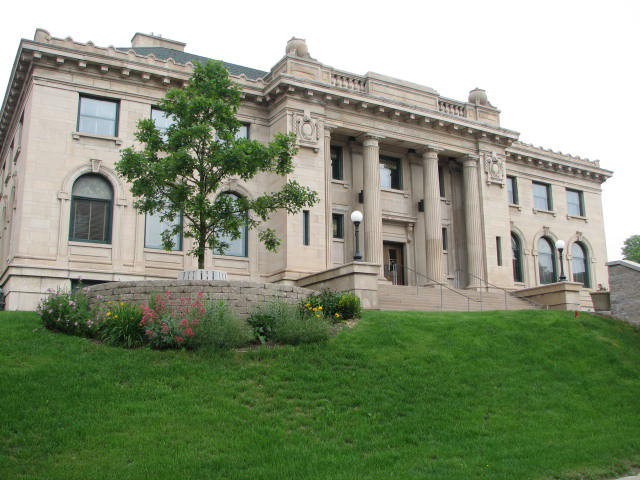
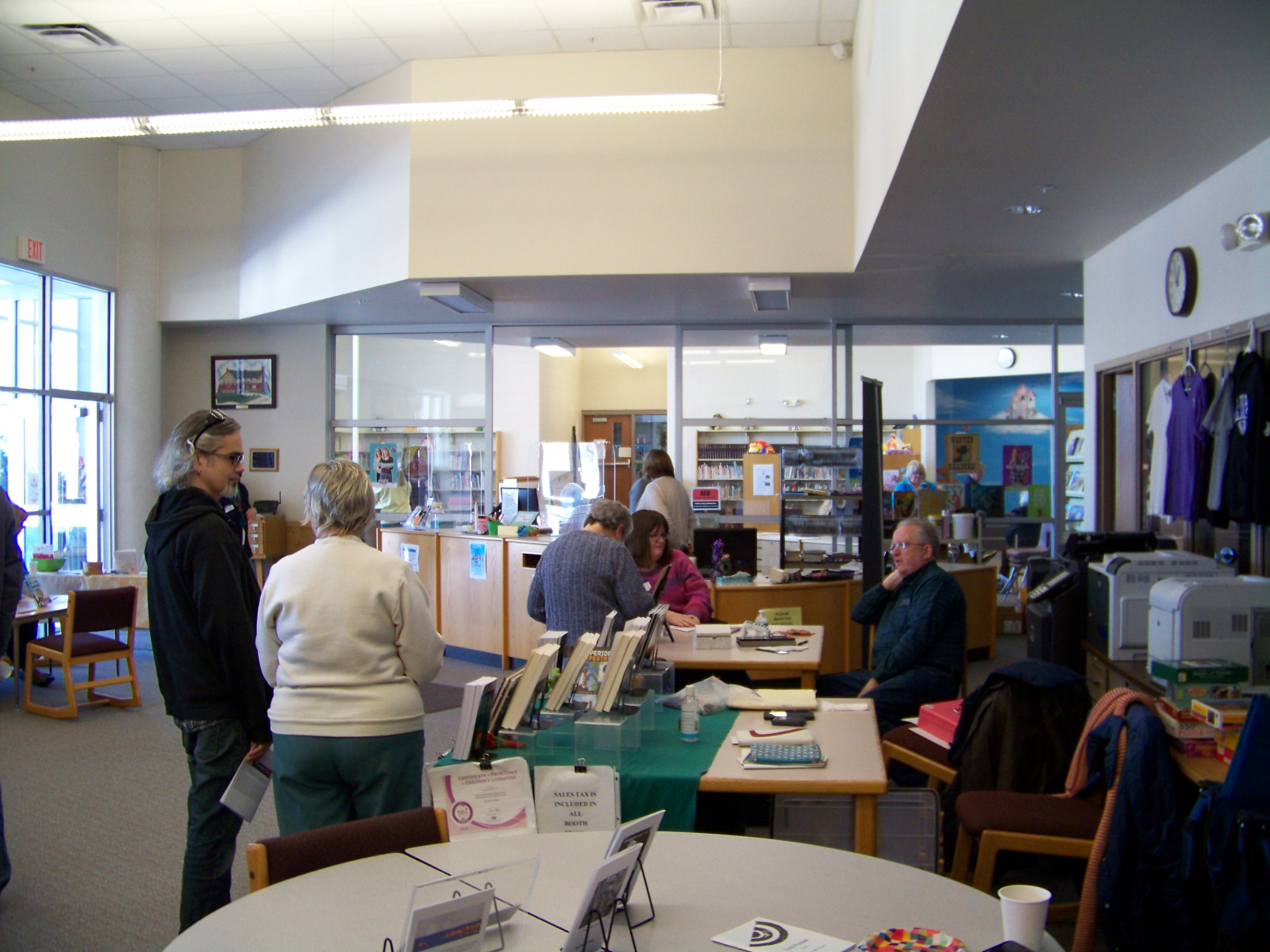
Peter White Public Library
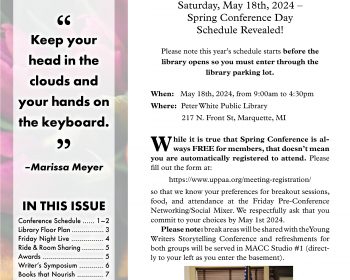
Saturday, May 18th, 2024 – Spring Conference Day Schedule
Please note this year’s schedule starts before the library opens so you must enter through the library parking lot
- 9:00 – 9:30 – Registration: complimentary coffee, baked goods, fruit
- 9:30 – 9:45 – Opening remarks, Victor R. Volkman, UPPAA President
- 9:45 – 10:45 – Keynote, Brian Bosley — Finding and keeping your True Purpose
- 10:45 – 11:00 – Morning Break
- 11:00 – 12:00 – Morning Session (pick only 1)
Carrie Pearson –”Navigating the Journey: Preparing for Traditionally Publishing Your Children’s Book in the NonFiction Market”
Tyler Tichelaar – “Self-Publishing 101: Why You Should Self-Publish and How to Do It” - 12:00 – 1:15 – Lunch/Networking Hour
- 1:15 – 1:45 – UPPAA Town Hall moderated by Victor
- 1:45 – 2:45 Afternoon Session #1 (pick only 1)
Sylvia Hubbard – “Weaving Romance Around Suspense with Intro to Plot Twisting”
Marian Volkman – “Getting Started, Staying Motivated: How to Make Writing Fun” - 2:45 – 3:00 Afternoon Break
- 3:00 – 4:00 Afternoon Session #2 (pick only 1)
Tabatha Hines – “Finding Your Writer’s Voice”
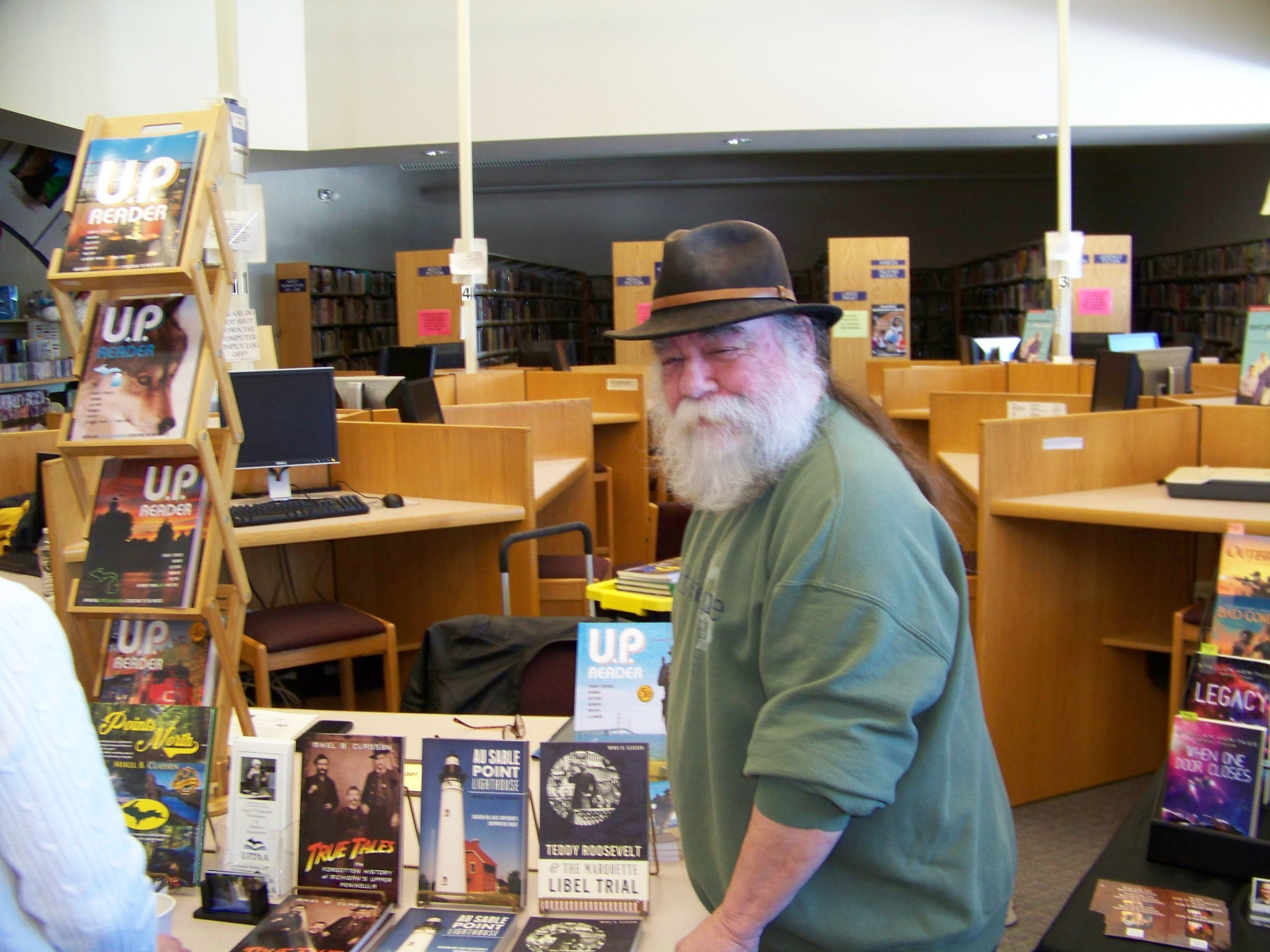
Mikel B. Classen, Deborah Frontiera, Michael Carrier – “Sell Your Books More Effectively in Person – Roundtable”
- 4:00 – 4:15 Door Prize Giveaways/Concluding Remarks by president
- 5:00 – Afterglow at the Crow’s Nest an informal gathering to take place
(top floor of the Landmark Inn, directly across the street)
please click here to register now!
Session Descriptions
Keynote Speaker – Brian Bosley
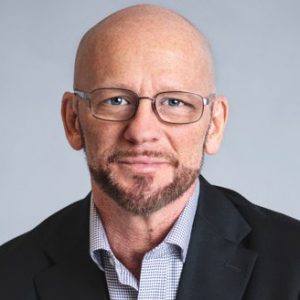 BRIAN BOSLEY (Gladstone, Michigan) is the creator of the innovative philosophy “Bamboo Progress!”; a straightforward method of success coaching based on the philosophy that excellence in this world starts with first choosing to think, feel, and behave like a world-class performer. His more than 25 years of business coaching expertise range from developing leadership in multi-million-dollar companies to helping individual professionals expand and grow. He is a popular speaker and trainer on the topics of leadership development, goal achievement, and change acceptance among other topics.
Brian loves to read, spend time outdoors, and follow University of Michigan football. He is a Michigan native, the proud father of two, “bonus dad” to four, and Grandpa B.
Morning / Post-Keynote Speakers
 “Navigating the Journey: Preparing for Traditionally Publishing Your Children’s Book in the NonFiction Market”
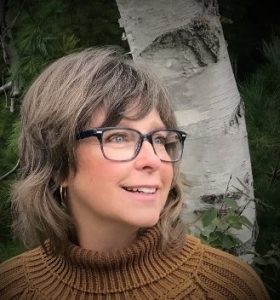
CARRIE A. PEARSON is a children’s book author of five traditionally published picture books, including the award-winning A Warm Winter Tail and Stretch to the Sun: From a Tiny Sprout to the Tallest Tree On Earth. Her latest book, Real Princesses Change the World (Roaring Brook/Macmillan) aims to unravel the ‘princess’ trope and introduce readers to powerful women with change-making intent. Carrie is originally a troll but now lives happily with her Yooper husband and occasionally their three grown-up daughters in Marquette on the shore of Lake Superior.
This presentation is tailored for aspiring and established children’s book authors interested in venturing into the dynamic world of nonfiction within the traditional publishing model. This session offers valuable insights and strategies to prepare you and your projects. The goal is to find areas of opportunity for your unique voice and story and help you take the leap. We’ll cover:
- navigating the children’s nonfiction landscape, including some definitions (to clarify what you are creating), current trends/openings, and more challenging landscapes.
- road maps: exemplary mentor texts for sub-genres and related craft exploration
- gatekeepers and mile markers: How do you submit, including a proposal or full draft? Agent or publishing house? Cover or query letter? When and how?
Along the way, Carrie will share the lifecycles of her authored nonfiction books to illustrate the concepts discussed. Includes Q&A and a lightning round of idea generation if time allows.
Join Carrie to learn and explore. Your adventure awaits!
“Self-Publishing 101: Why You Should Self-Publish and How to Do It”
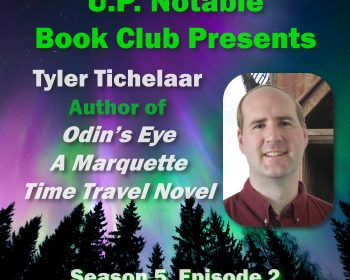
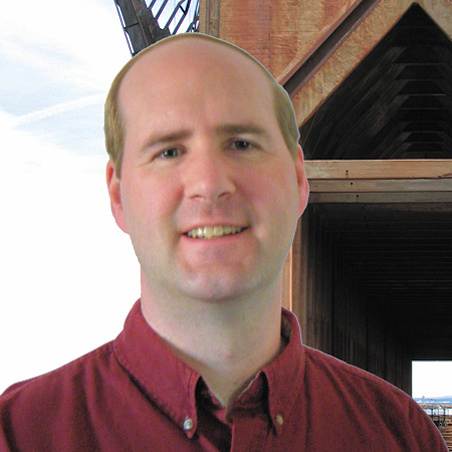 TYLER TICHELAAR is an author and editor. He has a PhD in Literature from Western Michigan University and Bachelor and Master’s Degrees in English from Northern Michigan University. He is the author of twenty-three books, including historical fiction, fantasy, history, and literary criticism. He began Superior Book Productions in 2008 to help other authors get their books edited and published. He is a former president and vice president of UPPAA. You can learn more about his work at http://www.superiorbookproductions.com/
“Self-Publishing 101” will walk authors through the process of self-publishing a book from writing and self-editing to publication. Attendees will learn the basics of:
- The Pros and Cons of Self-Publishing vs. Traditional Publishing
- Best writing practices to prepare your book for publication
- How to find and work with an editor
- The layout and cover design process
- How to get your book printed
- Different types of publications, including ebooks and audiobooks
- Book marketing tips
- Basic tips for running your own publishing business
please click here to register now!
Afternoon Session #1 Speakers
“Weaving Romance Around Suspense with Intro to Plot Twisting”
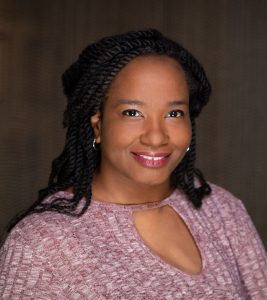 SYLVIA HUBBARD, Award-winning Detroit author and founder of Motown Writers, has independently published over 60 dark romance and intriguing suspense stories in the over 20 years she’s been in the literary business. As an avid blogger, podcaster, social media manager & digital strategist, Sylvia has received literary recognition for her literacy work, plus has had nine #1 Bestsellers. She is also a speaker, literary encouragement doula & busy mompreneur expert. Learn more about her work: www.SylviaHubbard.com | www.MotownWriters.com
Participants will learn the basis of the romance genre and how a writer can weave a “love story” throughout any genre book (suspense being popular). Digital Resources will be available to participants.
They will also learn:
- Methods of Basic Fiction Writing
- Suspense Methods & Romance Beats
- Components of Plot Twisting
“Getting Started, Staying Motivated: How to Make Writing Fun”
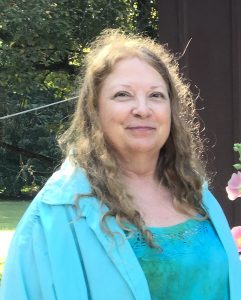 MARIAN VOLKMAN is the author of both non-fiction books such as Life Skills: Improving the Quality of Your Life with Applied Metapsychology as well as fiction such as Turtle Dolphin Dreams. This will be an interactive workshop session where you discover what will work for you to get started and really enjoy your next big writing project, regardless of the genre.
Afternoon Session #2 Speakers
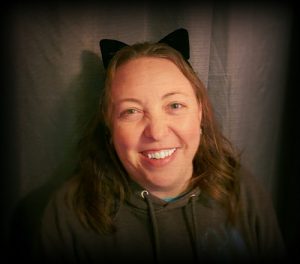 When not conjuring up phantasmal worlds in the world of Speculative Fiction, Tabatha Hines imparts her literary wisdom as a writing coach and teacher, nurturing the next generation of storytellers. A hybrid author of both traditional and self-publishing. Off the page, you might find her hiking through cemeteries or unraveling the mysteries of the paranormal, always with a story brewing in the back of her mind. Welcome to her dark world of ink and imagination, where every word is a doorway to another reality.
Looking to unlock the power of your unique voice as a writer? Join us in the presentation, ‘Finding Your Writer’s Voice.’ Discover the art of self-expression, narrative authenticity, and connecting with your writing on a profound level. We’ll explore practical techniques, real-life examples, and exercises to help you unearth your distinctive writing style. Join us to embark on a journey of self-discovery and creativity, where your voice becomes a powerful tool in crafting compelling stories and content.
- Unleash Creativity: Learn how to tap into your inner creativity to produce more engaging and original writing.
- Distinctive Style: Develop a unique writing style that sets you apart from others and leaves a lasting impression on your readers.
- Audience Connection: Discover strategies to connect emotionally with your audience, making your writing more relatable and impactful.
- Confidence Boost: Gain confidence in your writing abilities and trust in your voice as a writer.
- Practical Techniques: Acquire practical techniques and exercises to consistently produce content that resonates with your intended audience.
- Inspiration and Motivation: Leave with newfound inspiration and motivation to continue honing your writer’s voice and enhancing your storytelling skills.
“Sell Your Books More Effectively in Person – Roundtable”
- Mikel B. Classen (The Soo, MI) – U.P. historian and writer of fiction and non-fiction
- Deborah K. Frontiera (Calumet, MI) – middle-grade writer, poet, and U.P. historian
- Michael Carrier (Grand Rapids, MI) – creator of Jack Handler mystery/thrillers set in U.P.
If you could sit down with a top seller of books at in-person events over a nice cup of coffee, what would you most want to ask them? Here’s a list of questions that the audience might wish to pose:
- What are the best types of events to sell at?
- What equipment should I bring with me?
- I’m a shy person, how can I overcome this and talk to strangers?
- How can I display my books in a way that looks appealing?
- Should I / Can I sell things other than books in my booth?
- How early should I get there before it is open to the public?
- Do you have discounts or deals that are exclusive to in-person sales?
please click here to register now!